Congenital GI Anomalies
Differences in the food pipe, stomach, bowel or bile ducts present from birth.
What is Congenital GI Anomalies?
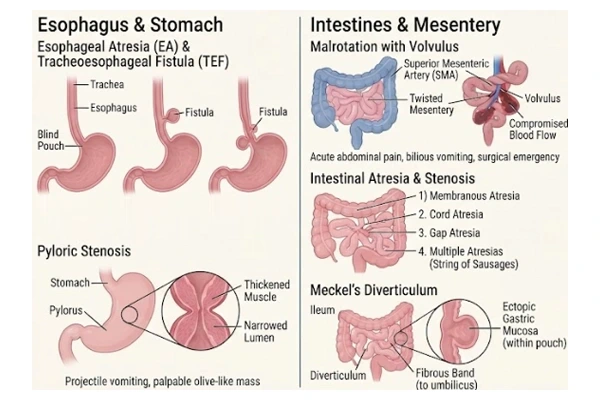
The digestive tract forms as a continuous tube early in pregnancy, and a range of differences can arise along its length — in the food pipe, stomach, small and large bowel, the bile ducts and the anus.
Some present dramatically in the first days of life with vomiting, a swollen tummy or an inability to feed. Others are silent for months or years and surface as recurrent pain, jaundice, bleeding or poor growth.
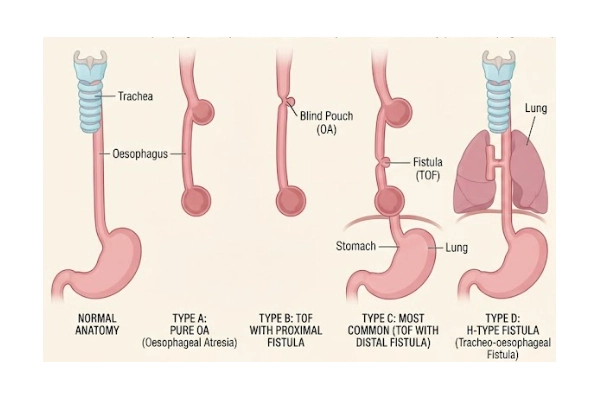
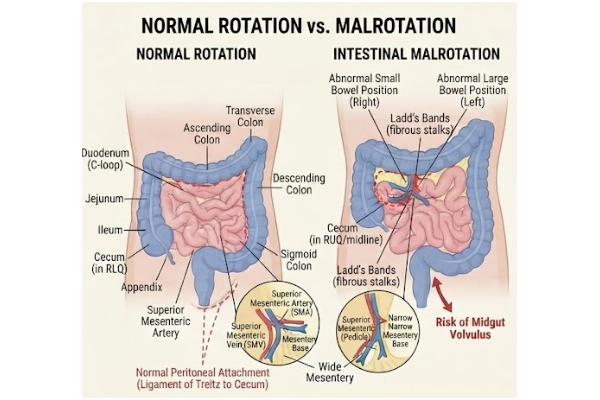
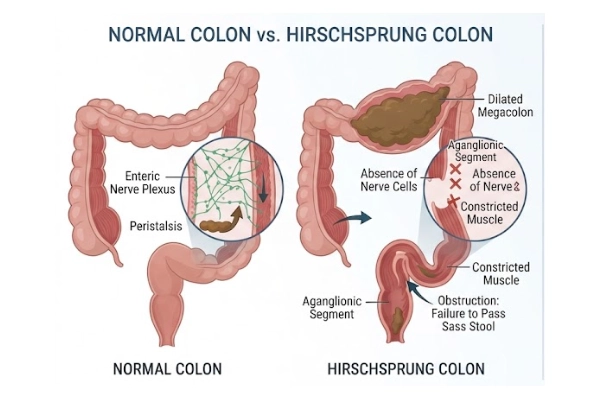
This page covers the group as a whole, including duplication cysts of the bowel, choledochal cyst of the bile duct, biliary atresia, congenital bands, and abnormalities of the oesophagus. Several of them have their own detailed pages.
One point deserves emphasis: persistent jaundice in a baby beyond two weeks of age, with pale stools and dark urine, is not ordinary newborn jaundice. It must be investigated urgently, because biliary atresia has a narrow window in which surgery works best.
In your language
Congenital GI Anomalies
Differences in the food pipe, stomach, bowel or bile ducts present from birth.
The digestive tract forms as a continuous tube early in pregnancy, and a range of differences can arise along its length — in the food pipe, stomach, small and large bowel, the bile ducts and the anus.
பிறவி செரிமான மண்டல குறைபாடுகள்
செரிமான மண்டலத்தில் பிறவியிலேயே பல வகை குறைபாடுகள் ஏற்படலாம் — உணவுக்குழாய், இரைப்பை, குடல், பித்தநீர்க் குழாய் ஆகியவற்றில். சில பிறந்த உடனேயே வாந்தி, வயிறு உப்புதலாக வெளிப்படும்; சில பல மாதங்கள் கழித்து வலி அல்லது வளர்ச்சிக் குறைவாக வெளிப்படும். மிக முக்கியமான எச்சரிக்கை: பிறந்து இரண்டு வாரங்களுக்கு மேலும் மஞ்சள் காமாலை நீடித்தால், மலம் வெளுத்த நிறத்தில் இருந்தால், சிறுநீர் கருமையாக இருந்தால் — அது சாதாரண காமாலை அல்ல. உடனடியாக பரிசோதிக்க வேண்டும்; சரியான நேரத்தில் அறுவை சிகிச்சை செய்தால் மட்டுமே பலன் கிடைக்கும்.
ജന്മനായുള്ള ദഹനവ്യവസ്ഥാ വൈകല്യങ്ങൾ
ദഹനവ്യവസ്ഥയിൽ ജന്മനാ പല വൈകല്യങ്ങളും ഉണ്ടാകാം — അന്നനാളം, ആമാശയം, കുടൽ, പിത്തനാളി എന്നിവയിൽ. ചിലത് ജനിച്ചയുടൻ ഛർദ്ദിയായും വയറു വീർക്കലായും പ്രകടമാകും; ചിലത് മാസങ്ങൾക്കു ശേഷം വേദനയായോ വളർച്ചക്കുറവായോ വരും. പ്രധാന മുന്നറിയിപ്പ്: ജനിച്ച് രണ്ടാഴ്ചയ്ക്കു ശേഷവും മഞ്ഞപ്പിത്തം നിലനിൽക്കുകയും മലം വെളുത്ത നിറത്തിലാവുകയും മൂത്രം കടും നിറമാവുകയും ചെയ്താൽ അത് സാധാരണ മഞ്ഞപ്പിത്തമല്ല. ഉടൻ പരിശോധിക്കണം; ശരിയായ സമയത്ത് ശസ്ത്രക്രിയ ചെയ്താലേ ഫലമുണ്ടാകൂ.
What Parents Notice
Not every child shows every sign. If something on this list matches your child, it is worth an examination rather than a guess.
- Vomiting, particularly green vomiting, in a newborn or infant
- A swollen tummy, or failure to pass meconium in the first 48 hours
- Recurrent abdominal pain in an older child with no clear cause
- Jaundice persisting beyond two weeks of age, with pale chalky stools and dark urine
- A lump felt in the tummy
- Poor weight gain and feeding difficulty
- Difficulty swallowing, choking with feeds or recurrent chest infections
- Blood in the stool
How It Is Confirmed
- Ultrasound of the abdomen as the starting investigation
- Contrast studies of the upper or lower gastro-intestinal tract
- Blood tests including liver function where jaundice is present
- CT or MRI, including MRCP for bile duct anatomy, in selected children
- Endoscopy or colonoscopy where indicated
- A detailed birth and feeding history, and any antenatal scan reports — please bring these to the consultation
How It Is Treated
- Treatment is specific to the anomaly, and ranges from observation to major reconstructive surgery.
- Duplication cysts are removed surgically, often laparoscopically in suitable children.
- A choledochal cyst is excised with reconstruction of bile drainage, because leaving it carries risks of infection, stones and later malignancy.
- Biliary atresia is treated with a Kasai portoenterostomy, and the outcome is strongly related to how early it is performed.
- Congenital bands causing obstruction are divided.
- Nutrition support is a central part of care for children with significant GI anomalies.
- Where a condition is beyond the scope of what can be offered here, the family is told clearly and helped with onward referral rather than kept waiting.
Does My Child Need Surgery?
Not every child with Congenital GI Anomalies needs an operation. These are the situations in which surgery is advised — and the decision is always made after examining your child, never from a description alone.
There is obstruction, a mass, or a structure that will not resolve on its own
The child has recurrent symptoms attributable to the anomaly
The anomaly carries a long-term risk if left, such as a choledochal cyst
Prolonged jaundice with pale stools — investigated urgently, and operated early if biliary atresia is confirmed
Some incidental findings need no surgery at all and are simply followed
What Happens Over Time
Ranges very widely. Many are corrected completely and the child grows up normally. Others are managed rather than cured, with the emphasis on nutrition, growth and organ function. Biliary atresia is the clearest example of outlook depending on timing — the earlier the operation, the better it works.
This describes what usually happens, not what will happen to your child. The surgeon will give you a specific picture after examining them.
Can It Be Prevented?
These form early in pregnancy and cannot be prevented. Prolonged jaundice in a newborn should be investigated rather than watched, because that is where timing genuinely changes the result.
From First Visit to Going Home
What happens, in order, so that nothing on the day comes as a surprise.
Consultation
Dr. Pratheep Samraj examines your child and goes through the history, earlier reports and any treatment already given.
Investigation
Only the tests that change the decision are asked for — commonly an ultrasound, blood tests, and occasionally an X-ray or a scopy.
Explanation
You are told what the condition is, whether it needs surgery, what happens if you wait, and what the operation involves.
Treatment
If surgery is appropriate it is planned with paediatric anaesthetic cover, with ICU and NICU support available in the hospital.
Follow-up
You go home with written instructions and a review date, and you can reach the hospital by phone or WhatsApp in between.
Hospital stay
Depends entirely on the condition — from a short day-care procedure to several weeks for a newborn needing major reconstruction and nutrition support.
Recovery at home
Varies with the operation. Feeding, growth and weight gain are the practical markers that recovery is going well.
Follow-up
Long-term for most of these conditions, with attention to growth, nutrition and organ function.
Please bring with you: all previous scan reports, blood test reports, discharge summaries, records of any earlier operation, current medicines, and your child’s immunisation card. Photographs on your phone of a swelling that comes and goes are genuinely useful.
Please note: this page is general information about Congenital GI Anomalies, not advice about your child. Timing, suitability for surgery and the expected result differ from child to child and are decided only after clinical evaluation.
Questions Parents Ask
If your question is not here, send it on WhatsApp — you will get an answer from the hospital team.
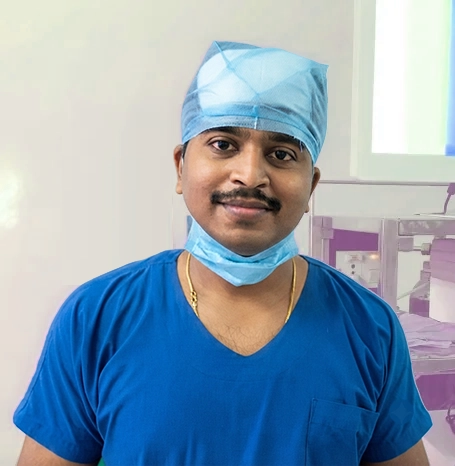
Dr. Pratheep Samraj
Consultant Paediatric & Neonatal Surgeon · Palliyadi, Kanyakumari
Super-specialist surgical care for newborns, infants and children, with expertise in paediatric urology, congenital anomalies, gastro-intestinal surgery and minimally invasive surgery.
Related Conditions
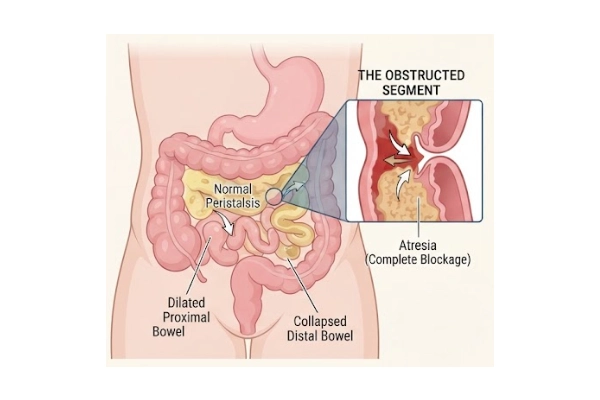
“Something is wrong with the gut” is a starting point, not a diagnosis.
These range from findings that need nothing to conditions needing major reconstruction, and the difference is worth establishing properly rather than living with. Bring every scan and report you have.
Consultation 10:00 AM - 1:00 PM & 4:00 PM - 8:00 PM · 24-hour laboratory & pharmacy
In an emergency — green vomiting in a baby, a groin swelling that will not go back, severe tummy pain, or a newborn not passing urine or meconium — come straight to the hospital or to your nearest emergency department. Do not wait for a reply to a message.