Gastroschisis
Bowel outside the abdomen at birth, with no covering sac.
What is Gastroschisis?
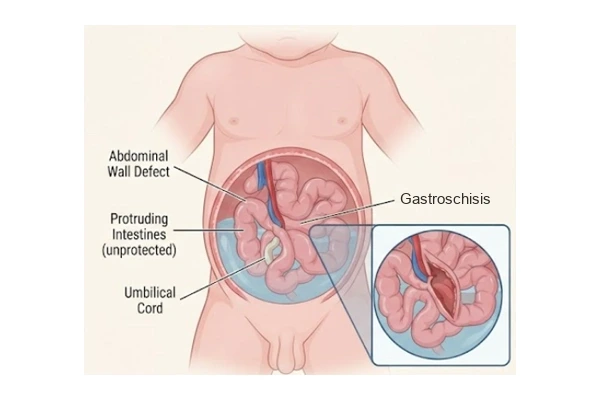
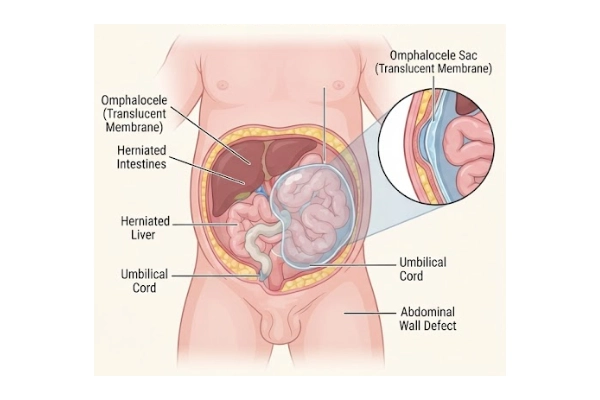
In gastroschisis the baby is born with a defect in the abdominal wall, usually just to the right of the umbilical cord, through which the intestines protrude. Unlike omphalocele, there is no covering sac — the bowel is exposed directly.
Because the bowel has been floating in amniotic fluid, it is often thickened, matted and inflamed at birth, and it takes time to start working normally afterwards.
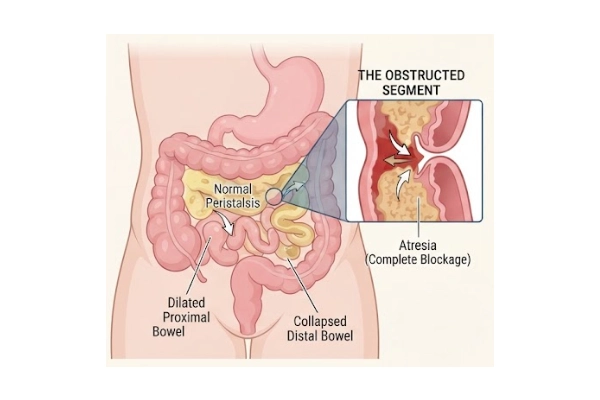
Unlike omphalocele, other abnormalities are relatively uncommon, apart from associated intestinal atresia in some babies.
It is usually detected on an antenatal scan. Delivery should be planned where paediatric surgery and neonatal intensive care are available.
The surgery is often the straightforward part. The long phase is waiting for the bowel to recover and tolerate feeds, which typically takes weeks and requires intravenous nutrition.
In your language
Gastroschisis
Bowel outside the abdomen at birth, with no covering sac.
In gastroschisis the baby is born with a defect in the abdominal wall, usually just to the right of the umbilical cord, through which the intestines protrude. Unlike omphalocele, there is no covering sac — the bowel is exposed directly.
காஸ்ட்ரோஸ்கிசிஸ்
காஸ்ட்ரோஸ்கிசிஸ் நிலையில் குழந்தை பிறக்கும்போது குடல் வயிற்றுச் சுவரில் உள்ள ஓட்டை வழியாக வெளியே இருக்கும் — எந்த மூடும் சவ்வும் இருக்காது. பிறந்த உடனேயே செய்ய வேண்டியது: வெளியே உள்ள குடலை தெளிவான பிளாஸ்டிக் உறையால் மூட வேண்டும் (ஈரத் துணி வேண்டாம் — அது குழந்தையை குளிர வைக்கும்), குழந்தையை வலது பக்கமாக கிடத்த வேண்டும், உடனடியாக NICU மற்றும் குழந்தை அறுவை சிகிச்சை வசதி உள்ள இடத்திற்கு கொண்டு செல்ல வேண்டும். அறுவை சிகிச்சைக்குப் பின் குடல் இயல்பாக வேலை செய்ய பல வாரங்கள் ஆகலாம் — அதுவரை நரம்பு வழி ஊட்டச்சத்து தேவை. இது எதிர்பார்க்கப்படும் நிலை; பதற வேண்டாம்.
ഗ്യാസ്ട്രോസ്കിസിസ്
ഗ്യാസ്ട്രോസ്കിസിസിൽ ജനിക്കുമ്പോൾ കുടൽ വയറിന്റെ ഭിത്തിയിലെ ദ്വാരത്തിലൂടെ പുറത്തായിരിക്കും — ആവരണ സഞ്ചി ഉണ്ടാകില്ല. ജനിച്ചയുടൻ ചെയ്യേണ്ടത്: പുറത്തുള്ള കുടൽ സുതാര്യമായ പ്ലാസ്റ്റിക് കൊണ്ട് പൊതിയുക (നനഞ്ഞ തുണി വേണ്ട — അത് കുഞ്ഞിനെ തണുപ്പിക്കും), കുഞ്ഞിനെ വലതുവശം ചെരിച്ചു കിടത്തുക, ഉടൻ NICU-വും പീഡിയാട്രിക് സർജറിയും ഉള്ളിടത്ത് എത്തിക്കുക. ശസ്ത്രക്രിയയ്ക്കു ശേഷം കുടൽ പ്രവർത്തിക്കാൻ ആഴ്ചകൾ എടുക്കാം — അതുവരെ ഞരമ്പിലൂടെ പോഷണം വേണ്ടിവരും.
What Parents Notice
Not every child shows every sign. If something on this list matches your child, it is worth an examination rather than a guess.
- Bowel visible outside the abdomen at birth, without any covering membrane, usually to the right of the umbilical cord
- The exposed bowel may look thickened, swollen or matted together
- Rapid heat and fluid loss from the exposed bowel — the immediate danger
- Feeding intolerance for a prolonged period after closure
- Detected on antenatal ultrasound in most cases
How It Is Confirmed
- Antenatal ultrasound, often with raised maternal serum alpha-fetoprotein
- The diagnosis is obvious at birth on inspection
- Assessment for associated intestinal atresia, which is the main associated problem
- Blood tests for hydration, electrolytes and infection
- Serial assessment of bowel function after closure
How It Is Treated
- Immediate care at birth is critical: wrap the exposed bowel in clear plastic film or a bowel bag to prevent heat and fluid loss, do not use wet gauze that cools the baby, place the baby on the right side to prevent kinking of the bowel, pass a nasogastric tube, and start intravenous fluids.
- Transfer urgently to a centre with paediatric surgery and neonatal intensive care.
- Primary closure where the defect is small and the abdomen can accommodate the bowel.
- Staged reduction using a preformed silo where primary closure would raise abdominal pressure dangerously — the bowel is gradually returned over several days, then the wall is closed.
- Intravenous nutrition until the bowel begins to work, which commonly takes two to four weeks or more.
- Feeds are introduced slowly, preferably with breast milk, and built up as tolerated.
Does My Child Need Surgery?
Not every child with Gastroschisis needs an operation. These are the situations in which surgery is advised — and the decision is always made after examining your child, never from a description alone.
On day one — gastroschisis always requires surgical treatment, and the exposed bowel must be protected from the moment of birth
Immediate primary closure where feasible
Silo placement followed by staged reduction where the abdominal cavity cannot accommodate the bowel at once
Further surgery if an associated intestinal atresia is present, usually addressed once the bowel condition improves
What Happens Over Time
Good for most babies. Once feeding is established, children with gastroschisis and no associated atresia generally grow and develop normally. The demanding part is the weeks of slow feeding, not the operation.
This describes what usually happens, not what will happen to your child. The surgeon will give you a specific picture after examining them.
Can It Be Prevented?
It cannot be prevented. It is more common in babies of very young mothers, for reasons that are not understood.
From First Visit to Going Home
What happens, in order, so that nothing on the day comes as a surprise.
Consultation
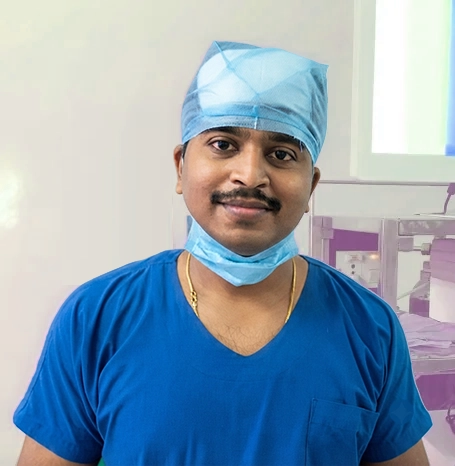
Dr. Pratheep Samraj examines your child and goes through the history, earlier reports and any treatment already given.
Investigation
Only the tests that change the decision are asked for — commonly an ultrasound, blood tests, and occasionally an X-ray or a scopy.
Explanation
You are told what the condition is, whether it needs surgery, what happens if you wait, and what the operation involves.
Treatment
If surgery is appropriate it is planned with paediatric anaesthetic cover, with ICU and NICU support available in the hospital.
Follow-up
You go home with written instructions and a review date, and you can reach the hospital by phone or WhatsApp in between.
Hospital stay
Typically several weeks in NICU, dominated by the time taken to establish full feeds rather than by the operation itself.
Recovery at home
The bowel recovers slowly. Feed intolerance in the early weeks is expected and is not a sign that something has gone wrong.
Follow-up
Growth, nutrition and bowel function over months, with attention to any residual feeding difficulty.
Please bring with you: all previous scan reports, blood test reports, discharge summaries, records of any earlier operation, current medicines, and your child’s immunisation card. Photographs on your phone of a swelling that comes and goes are genuinely useful.
Please note: this page is general information about Gastroschisis, not advice about your child. Timing, suitability for surgery and the expected result differ from child to child and are decided only after clinical evaluation.
Questions Parents Ask
If your question is not here, send it on WhatsApp — you will get an answer from the hospital team.
Dr. Pratheep Samraj
Consultant Paediatric & Neonatal Surgeon · Palliyadi, Kanyakumari
Super-specialist surgical care for newborns, infants and children, with expertise in paediatric urology, congenital anomalies, gastro-intestinal surgery and minimally invasive surgery.
Related Conditions
Wrap the bowel in clear film, keep the baby warm, and transfer urgently.
Clear plastic film, not wet gauze — wet gauze cools the baby and makes things worse. If this has been seen on your antenatal scan, plan the delivery with us in advance rather than after.
Consultation 10:00 AM - 1:00 PM & 4:00 PM - 8:00 PM · 24-hour laboratory & pharmacy
In an emergency — green vomiting in a baby, a groin swelling that will not go back, severe tummy pain, or a newborn not passing urine or meconium — come straight to the hospital or to your nearest emergency department. Do not wait for a reply to a message.